


Finding the right words after someone experiences a loss is never easy. A thoughtful condolence message can offer comfort, show support, and remind grieving people that they are not alone. Even a few sincere words can bring warmth during a difficult time. Many people struggle with what to write in sympathy cards, texts, or messages because they want to be respectful and genuine.
The following collection of condolence messages helps express sympathy, compassion, and care in different situations. These messages are simple, heartfelt, and appropriate for family members, friends, colleagues, and loved ones who are going through a time of grief.
Simple Condolence Messages

Sometimes the simplest words carry the most weight. These messages work for any loss when someone is not sure what to say.
- “I am so deeply sorry for your loss. My thoughts are with you.”
- “Please know that you are in my heart during this painful time.”
- “Sending you love and strength as you grieve.”
- “There are no words to ease this pain, but please know I am here for you.”
- “My heart breaks for you. I am so sorry.”
- “You are surrounded by love, even in this darkness.”
- “Wishing you peace and comfort in the days ahead.”
- “I am truly sorry. Please take care of yourself.”
- “Holding you close in my thoughts and prayers.”
- “My sincerest condolences to you and your family.”
- “I am so sorry for what you are going through. You are not alone.”
- “May you find moments of peace amid the sorrow.”
- “Words feel inadequate right now, but know that I care deeply.”
- “You are in my thoughts every single day.”
- “Sending you nothing but warmth and compassion.”
Short Condolence Messages for Text or Cards
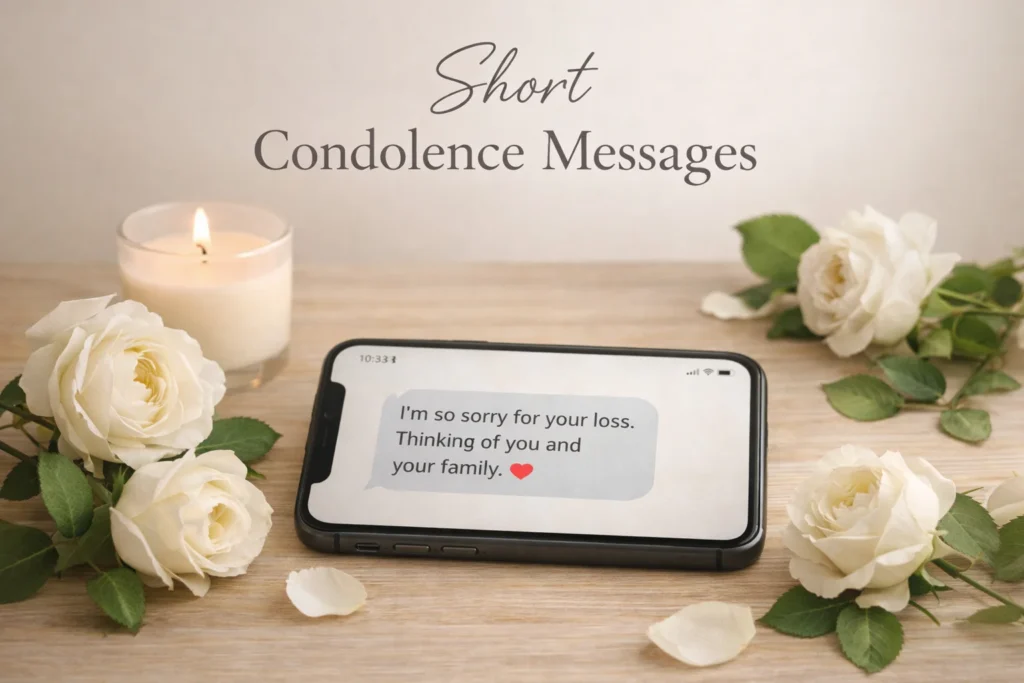
When someone needs something brief, these short condolence messages are perfect for a quick text, a sympathy card, or a social media message.
- “So sorry for your loss. Thinking of you.”
- “My heart is with you right now.”
- “Sending love your way.”
- “Thinking of you during this hard time.”
- “Deepest sympathies to you and yours.”
- “You are in my thoughts.”
- “I am so sorry. Here if you need me.”
- “With you in spirit always.”
- “Grief is love with nowhere to go. I am so sorry.”
- “Wishing you peace and healing.”
- “Sending strength your way today.”
- “My prayers are with you.”
- “Take all the time you need. I am here.”
- “So much love to you.”
- “Rest easy knowing you are not alone.”
Condolence Messages for a Family Member
When someone’s family is mourning together, these messages acknowledge the collective grief.
- “Your family is in my thoughts and prayers during this incredibly difficult time.”
- “I am so sorry for the loss your family is carrying right now. May you find strength in each other.”
- “Please extend my deepest condolences to everyone in your family.”
- “In times like these, I hope your family finds comfort in the love you all share.”
- “No words can take away this pain, but please know your family is surrounded by care and support.”
- “Sending healing thoughts to your entire family.”
- “May your family lean on one another and on those who love you during this season of grief.”
- “Your family has always been such a beautiful example of love. I am heartbroken for your loss.”
- “May the memories you share as a family bring you moments of peace.”
- “I am holding your whole family in my heart right now.”
Condolence Messages for the Loss of a Parent
Losing a parent is one of the most profound losses a person can experience. These messages honor both the grief and the deep bond.
- “Losing a parent is losing a piece of your foundation. I am so incredibly sorry.”
- “Your mother/father clearly raised someone remarkable. Their legacy lives on through you.”
- “There is no loss quite like losing a parent. My heart is with you completely.”
- “I hope the beautiful memories of your parent bring you comfort when you need it most.”
- “Your mom/dad was loved by so many. What a tremendous life they lived.”
- “You were blessed to have such a wonderful parent, and they were blessed to have you.”
- “May your parent’s spirit continue to guide and comfort you in the years ahead.”
- “Thinking of you as you navigate life without them by your side. You are not alone.”
- “The bond between a parent and child never really ends. Their love stays with you always.”
- “I am so sorry for the loss of your dad/mom. Please let me know how I can support you.”
Condolence Messages for the Loss of a Child
The loss of a child is beyond words. These messages try to honor the depth of that grief with care and gentleness.
- “There are truly no words for a loss this devastating. My heart is broken for you.”
- “Your child was so deeply loved. That love never leaves.”
- “I am so profoundly sorry. Please know I am here for you no matter what you need.”
- “The world is a little less bright without your little one in it. Sending you so much love.”
- “You are in my thoughts constantly. I cannot imagine the pain you are carrying.”
- “Your child’s life, however short, mattered immeasurably. They were so loved.”
- “Grief this deep shows how great the love was. I am so sorry.”
- “Please lean on the people around you. You do not have to carry this alone.”
- “Sending every ounce of love and comfort I have to you right now.”
- “Your child will be remembered and cherished by all who knew them.”
Condolence Messages for the Loss of a Spouse or Partner
Losing the person you built your life with is its own kind of grief. These messages acknowledge the deep intimacy of that bond.
- “Losing your partner is losing your whole world. My heart goes out to you.”
- “You and your partner had something truly special. I am so sorry for your loss.”
- “I cannot imagine life without my own partner. I am so deeply sorry for yours.”
- “May the love you shared carry you through this unbearable time.”
- “Your partner was so lucky to have been loved by you. I am heartbroken for you.”
- “Please know that you have people around you who care. You are not alone in this.”
- “The love story you two shared was beautiful. That story never truly ends.”
- “I am so sorry for the loss of your best friend, your love, your partner.”
- “Sending you strength as you face each day without them beside you.”
- “Their love shaped who you are. That is a gift that stays with you forever.”
Condolence Messages for the Loss of a Sibling
Losing a sibling is losing someone who has known you your whole life. These messages speak to that irreplaceable bond.
- “Siblings share a lifetime of memories. I am so sorry yours was taken too soon.”
- “I am heartbroken for you. Losing a sibling is losing a part of your own story.”
- “Your brother/sister clearly meant the world to you. I am so sorry.”
- “No one knew you quite like your sibling did. What a tremendous loss this is.”
- “May the years of love and laughter you shared bring you some comfort now.”
- “I am thinking of you and your whole family during this painful time.”
- “You will carry your sibling’s memory with you every single day. What a gift to have known them.”
- “I am so sorry for the loss of your sibling. Please know I am here for you.”
- “Growing up together, sharing so much, losing that is unimaginably hard. Sending you love.”
- “Your brother/sister was so loved. That love does not go away.”
Condolence Messages for the Loss of a Grandparent
Grandparents hold a special place in family history. These messages honor their lives and the legacy they leave behind.
- “Grandparents are our connection to the past. I am so sorry for your loss.”
- “Your grandmother/grandfather lived a life full of love, and that love touched so many people.”
- “May the wisdom and warmth they gave you carry you through this time of grief.”
- “What a blessing to have had them in your life for so long. I am sorry for your loss.”
- “They leave behind a beautiful legacy through you and your family.”
- “Sending love as you say goodbye to one of the most important people in your life.”
- “Their stories, their hugs, their wisdom, those things stay with you always.”
- “I am so sorry. May your grandparent rest in peace and perfect love.”
- “Thinking of you as you grieve the loss of such a special person.”
- “A grandparent’s love is one of the purest things in the world. I am so sorry yours is gone.”
Condolence Messages for Friends and Loved Ones

When the grief belongs to a close friend, these messages feel more personal and intimate.
- “You have always been there for me. Now I want to be there for you. I am so sorry.”
- “I love you deeply and I am so heartbroken alongside you right now.”
- “You do not have to be strong right now. Just let me be here for you.”
- “I am just a phone call away, day or night. Please do not hesitate to reach out.”
- “Grief hits differently when it is someone you love this much. I am so sorry, friend.”
- “You are one of the strongest people I know, but you do not have to be right now.”
- “I am showing up for you however you need me, today and in the weeks ahead.”
- “This loss is real and heavy. I am not going anywhere.”
- “I love you. That is all I really know how to say right now.”
- “We will get through this together. I promise.”
Condolence Messages for a Colleague
Professional relationships can still hold genuine warmth. These messages strike the right tone for a work setting.
- “Please accept my sincerest condolences on behalf of our team. We are thinking of you.”
- “I was so saddened to hear of your loss. Please take the time you need.”
- “Our whole team is here for you. Please do not hesitate to reach out.”
- “Your loss is felt by all of us. We are keeping you and your family in our thoughts.”
- “Please know that work can wait. Take care of yourself and your family first.”
- “It has been a privilege working alongside you. I am truly sorry for your loss.”
- “If there is anything I can take off your plate during this time, please let me know.”
- “Sending my deepest sympathies to you and your loved ones.”
- “Please accept my heartfelt condolences. We are thinking of you during this difficult time.”
- “You have my full support. Please reach out if there is anything I can do.”
Condolence Messages for Sudden or Unexpected Loss
When a death comes without warning, the shock intensifies the grief. These messages try to acknowledge that specific kind of pain.
- “Sudden loss leaves no time to prepare. I am so deeply sorry for what you are going through.”
- “There are no words for a loss this shocking and unexpected. I am right here with you.”
- “When something like this happens out of nowhere, the grief hits even harder. Please lean on the people around you.”
- “I am stunned and heartbroken alongside you. What a devastating blow.”
- “Please know that you do not have to process this alone. I am here.”
- “Unexpected loss is one of the cruelest kinds. I am so sorry this happened to you.”
- “Sending you as much strength and peace as words can carry right now.”
- “There was no time to say goodbye. That makes this so much harder. I am so sorry.”
- “I am keeping you in my thoughts every single day as you navigate this impossible grief.”
- “You are surrounded by love even when everything feels like it is falling apart.”
Sympathy Card Messages
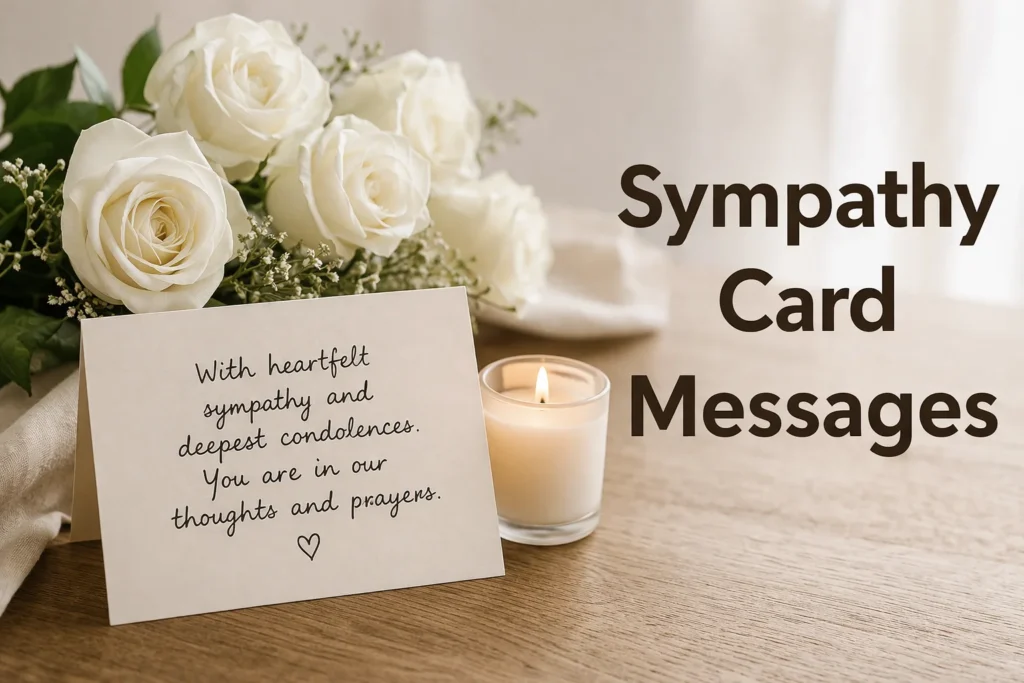
When writing inside a card, the message needs to feel warm, personal, and complete even in a small space.
- “With deepest sympathy and so much love from our family to yours.”
- “May this card carry even a small piece of the comfort we wish we could give you in person.”
- “Thinking of you and sending love with every word written here.”
- “No card can say enough, but know that our hearts are with you completely.”
- “With sympathy and with hope that brighter days are ahead for you and your family.”
- “You meant so much to them, and they meant so much to you. That love is forever.”
- “Wishing you peace, comfort, and the support of everyone who loves you.”
- “We are holding you in our hearts. With much love.”
- “May this small gesture remind you that you are never alone in your grief.”
- “Thinking of you today, tomorrow, and in all the days ahead.”
How to Write a Condolence Message
Writing a condolence message feels daunting, but it does not have to be perfect. Here are a few principles that make any message more meaningful.
Keep it genuine. A message does not need to be long or poetic to matter. What the grieving person needs most is to feel seen and not alone.
Acknowledge the specific loss. Mentioning the person who died by name or noting your relationship to them makes the message feel personal rather than generic.
Avoid silver linings. Phrases like “everything happens for a reason” or “they’re in a better place” can feel dismissive, even when well-intentioned. It is better to simply sit with the person in their grief.
Offer something specific. Instead of “let me know if you need anything,” try “I am bringing dinner on Thursday” or “I can watch the kids any afternoon this week.”
Keep the focus on the grieving person. This is not the time to share your own stories of loss unless the person specifically asks.
Short is okay. A brief, heartfelt message is always better than a long, awkward one.
Conclusion
Condolence messages are small gestures that carry deep meaning. When someone experiences loss, knowing that others care can make a difficult moment a little easier to bear. Whether written in a sympathy card, text message, or spoken in person, heartfelt words show compassion and support.
The most meaningful messages are simple, sincere, and thoughtful. They acknowledge grief while offering comfort and strength. By sharing kind words and remembering loved ones with respect, people can help others feel less alone during one of life’s most challenging times.
Frequently Asked Questions
What should I write in a sympathy card?
Keep it simple and genuine. Acknowledge the loss, mention the person who died by name if possible, and offer your love or support. A few sincere sentences are always better than a long, generic message. For example: “I am so sorry for the loss of your mother. She was a remarkable woman, and you are in my heart.”
What are appropriate short condolence messages?
Short messages work best for texts and cards. Try something like: “Thinking of you during this hard time,” “Sending love and strength your way,” or “I am so sorry for your loss. I am here for you.” Brevity is never rude when the emotion is real.
How do I comfort someone who is grieving?
Show up consistently. Do not just offer comfort in the first few days and then disappear. Check in weeks later too. Offer specific help rather than vague offers. Listen more than you speak. Let them talk about the person they lost without steering the conversation.
Is it okay to send condolence messages by text?
Yes, especially for acquaintances or when someone lives far away. A heartfelt text is far better than silence. For close friends or family, consider following up with a handwritten card or an in-person visit as well.
What should I say when someone loses a parent?
Acknowledge the depth of the bond. Something like: “Losing a parent is one of the hardest things anyone goes through. I am so sorry. Their love for you was so clear, and that love stays with you always.” Mention the parent by name if you knew them.
How do I write a condolence message if I didn’t know the person well?
Focus on the grieving person rather than the one who died. Something like: “I may not have known them personally, but I can see how much they meant to you. I am so sorry for your loss and I am thinking of you.” Honesty and kindness go further than trying to say more than you know.
How should I offer help in a condolence message?
Be specific. Instead of “let me know if you need anything,” say something like “I am dropping off a meal this week” or “I can handle the grocery run whenever you need.” Specific offers take the decision-making burden off the grieving person, making it much easier for them to actually accept help.